Movie Critique - "A Trip to the Moon”
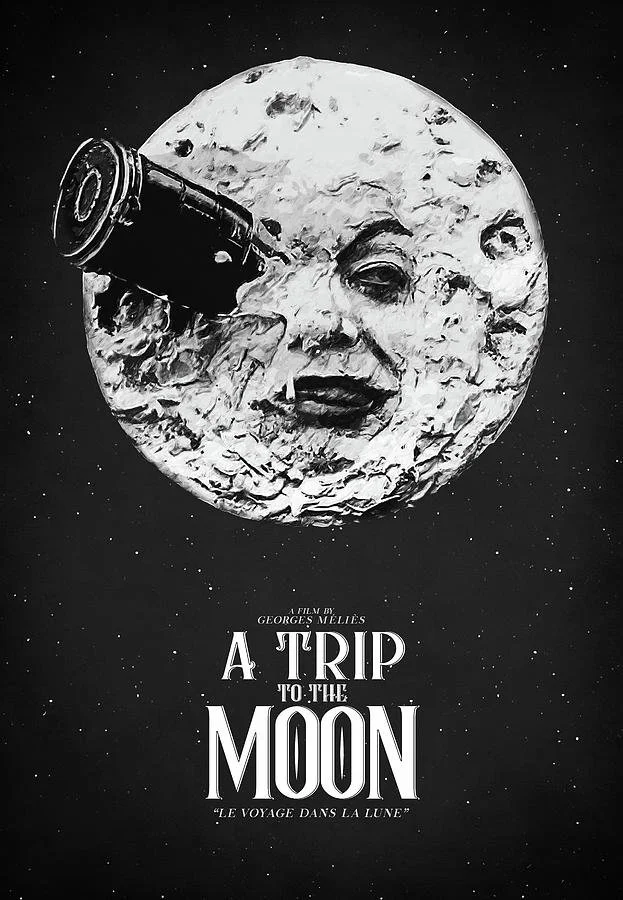
As a lover of cinema, I recently had the opportunity to watch the classic French film, "A Trip to the Moon," directed by Georges Méliès. Despite being made over 100 years ago in 1902, the film still manages to captivate audiences with its imaginative and whimsical story.
The film follows a group of astronomers as they journey to the moon on a spaceship. Once they arrive, they encounter a group of moon men and engage in a fantastical adventure. What struck me most about the film was its playful spirit and creative use of special effects. Despite being made at a time when technology was limited, Méliès managed to create a sense of wonder and magic that still holds up today.
One of the most iconic scenes in the film is when the spaceship lands on the moon's surface. Méliès used a combination of miniature models and matte paintings to create the illusion of the ship crashing into the moon. This was a groundbreaking technique at the time and paved the way for future filmmakers to experiment with special effects.
Another memorable scene is when the astronomers encounter the moon men, who are played by actors in elaborate costumes. Méliès used a combination of reverse motion and stop-motion animation to create the illusion of the moon men disappearing and reappearing. This was a clever use of technology at the time and added to the fantastical nature of the film.
What struck me most about the film was how it serves as a testament to the power of creativity, even in the face of limitations. Méliès was working with a limited budget and limited technology, yet he was still able to push the boundaries of what was possible in filmmaking at the time. His willingness to break the rules and think outside the box allowed him to create something truly unique and groundbreaking. As someone who has experienced the frustrations of trying to create on a limited budget, "Trip to the Moon" really resonated with me. It reminded me that creativity is not about the resources you have, but rather about your ability to think creatively and use what you have in new and innovative ways.
In fact, one could argue that the limitations of the time actually helped to fuel Méliès' creativity. Without access to the sophisticated technology of today, he was forced to use his imagination and come up with creative solutions to achieve his vision. This is a valuable lesson for anyone working in the creative arts today, as it is easy to become reliant on technology and forget the power of imagination and resourcefulness.
Another interesting aspect of the film is its use of symbolism. For example, the moon is often associated with the feminine and the unknown, which is reflected in the film's portrayal of the moon men as mysterious and otherworldly. The film also explores themes of exploration and discovery, which were relevant at the time as explorers were venturing to new lands and territories. The film's use of symbolism adds another layer of depth to the story and makes it more than just a simple adventure tale.
Overall, "A Trip to the Moon" is a testament to the power of creativity and imagination. Despite being made over 100 years ago, it still manages to inspire and captivate audiences today. It serves as a reminder that even in the face of limitations and obstacles, we have the power to create something truly extraordinary if we are willing to break the rules and think outside the box.